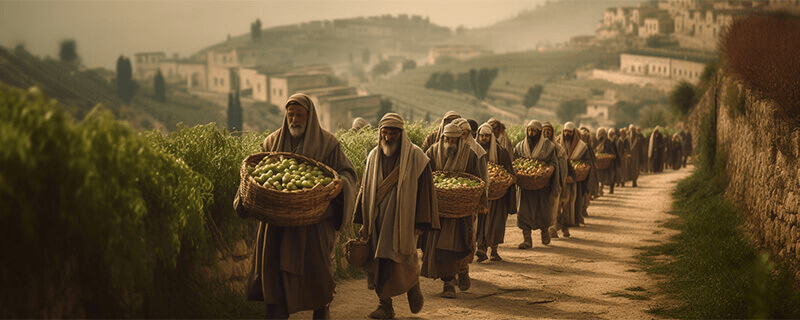
Besides its historical significance, Shavuot also coincides with the time of the harvest and therefor includes an agricultural aspect and tradition, such as the bringing of the Bikkurim.
In ancient times, farmers would bring their first fruits, or Bikkurim – made up of the seven species (wheat, barley, grapes, figs, pomegranates, olives, and dates) that are native to the land of Israel – to the Temple as a way of giving thanks for the abundance of the land.
You shall bring the choice first fruits of your soil to the house of the Lord your God
The farmers would prepare their harvest with care and respect. They would meticulously weave baskets from natural materials and lovingly adorn them with colorful ribbons and flowers, signifying the beauty and diversity of nature's gifts.
As the farmers embarked on their journey to the holy city, they were joined by fellow travelers, creating a vibrant procession of individuals from all walks of life. Together, they traversed the land, singing psalms of praise and gratitude, their voices intertwined with the melodies of ancient prayers.
Upon reaching the Temple in Jerusalem, the farmers would approach the priests with reverence, and offer their baskets of first fruits, presenting them as a sacred offering to the divine. The priests, representing the spiritual connection between the people and the Almighty, received these offerings with solemnity and joy.
The farmers would recite the following:
In this sacred exchange, the farmers and priests expressed their shared devotion and appreciation. The Levites, in turn, chanted ancient blessings, infusing the atmosphere with a sense of awe and reverence. Through this ritual, the unity of the community and their profound connection to the land and its Creator were celebrated.
Bikkurim reminds us of the importance of gratitude and humility in our lives. It teaches us to recognize the blessings bestowed upon us, to appreciate the abundance of the earth, and to acknowledge our dependence on the divine. Through this observance, we strengthen our connection to our heritage, to the land, and to the spiritual legacy passed down through generations.
While this practice is no longer possible since the destruction of the Temple in 70 CE, the Shavuot holiday still has agricultural themes that are reflected in some of the customs and traditions associated with Shavuot. For example, it is traditional to decorate synagogues and homes with flowers and greenery, which are symbols of the harvest and the blooming of the land. It is also customary to eat dairy foods on Shavuot, which some scholars believe is related to the idea of the land of Israel “flowing with milk and honey.”