As we transition from Parashat Kedoshim to Parashat Emor, it is worth recalling that last week’s reading focused on the call to holiness for all of Israel—"You shall be holy, for I, Hashem your God, am holy." The Torah outlined mitzvot that shape the moral and spiritual fabric of the nation. Parashat Emor now turns its attention to the kohanim, the priests, and the sanctity required of them, as well as the sanctity of sacred times and offerings, building on the foundation of holiness established previously.
Parashat Emor opens with special laws for the kohanim. They are forbidden to become ritually impure through contact with the dead, except for their closest relatives. The kohen gadol, the High Priest, is held to an even higher standard—he may not become impure for anyone, nor may he leave the sanctuary for mourning. Kohanim are also restricted in whom they may marry: they may not marry a divorcee or a woman with certain past relationships, and the kohen gadol may only marry a virgin. The Torah then lists physical blemishes that disqualify a kohen from serving in the Temple, though he may still eat from the holy offerings. Similarly, a kohen who is ritually impure may not eat from the sacred foods until he is purified.
The parasha continues with laws about who may eat from the offerings: only members of the kohen’s household, not outsiders or hired workers. The Torah then details the requirements for animals brought as sacrifices: they must be unblemished, and newborn animals must remain with their mothers for at least seven days before being offered. The prohibition of slaughtering an animal and its offspring on the same day is also stated.
Next, the Torah presents the calendar of sacred times. Shabbat is mentioned first, followed by the festivals: Pesach, with its laws of matzah and the prohibition of chametz; the Omer offering, which begins the count toward Shavuot; Shavuot itself, marked by a new grain offering and special sacrifices. Rosh Hashanah is described as a day of shofar-blowing, Yom Kippur as a day of atonement and self-denial, and Sukkot as a week-long festival with the mitzvah of dwelling in booths and taking the four species. Shemini Atzeret, the concluding festival, is also mentioned.
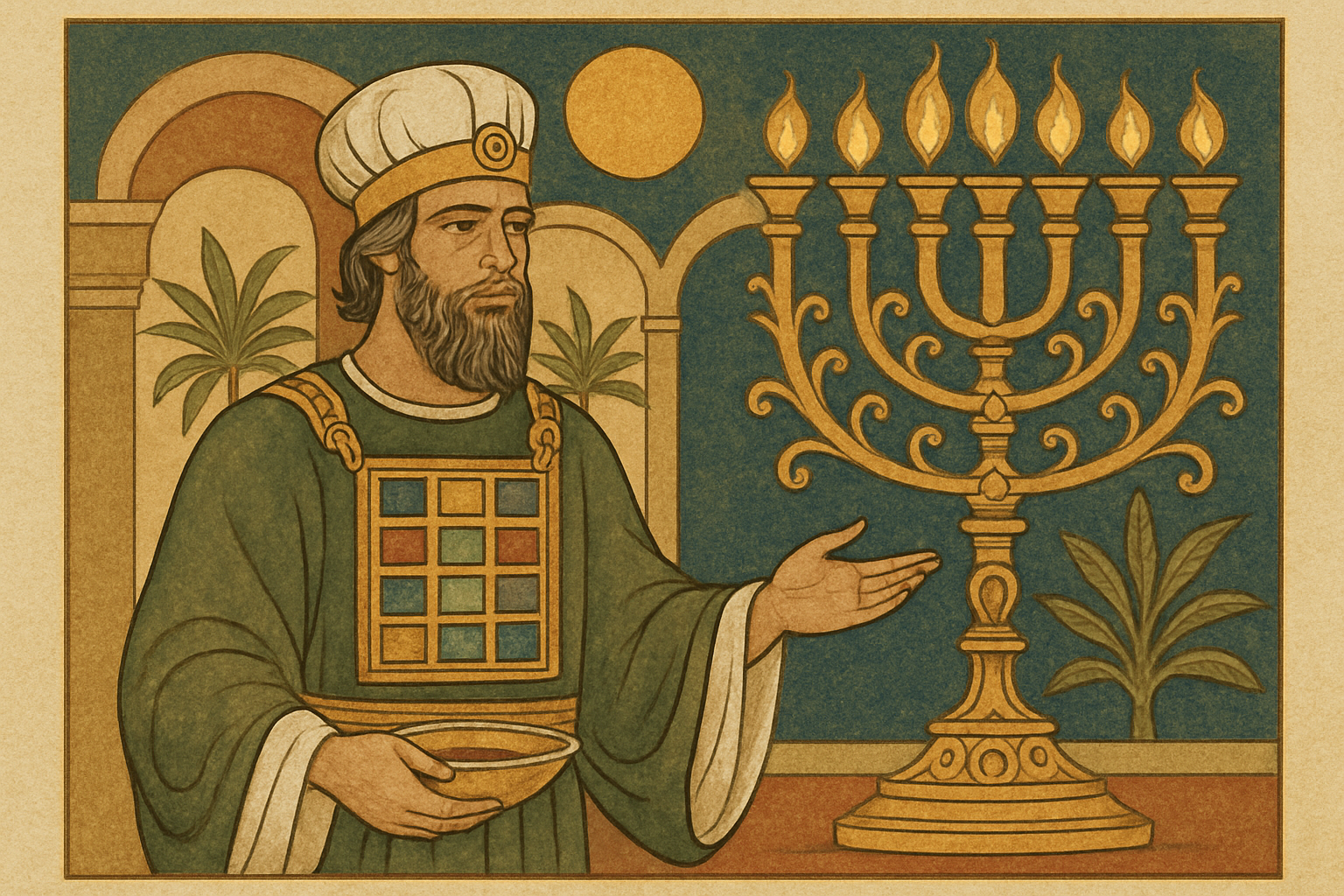
The parasha then turns to the Menorah and the Lechem HaPanim, the showbread, which are to be arranged regularly in the Mishkan. Finally, a narrative section describes a man who blasphemes God’s Name and is brought before Moshe. God instructs that he be put to death by stoning, and the laws of punishment for murder, injury, and property damage are reiterated: "an eye for an eye, a tooth for a tooth."
One striking idea emerges from the parasha’s opening: the Torah’s insistence on the kohanim’s elevated standards of purity and conduct. The Sages note that the phrase "Say to the kohanim... and you shall say to them" is repetitive. Rashi explains that this double language teaches us to "warn the adults regarding the children"—that adults must ensure the next generation upholds these standards. This is not just about ritual purity, but about the transmission of values. The kohanim, as spiritual leaders, are tasked with modeling and teaching holiness, not only through their own behavior but by actively guiding their children. This principle extends beyond the priesthood. Every Jew, in their own sphere, is responsible for passing on the values of Torah and sanctity. The Torah’s detailed laws—whether about festivals, offerings, or personal conduct—remind us that holiness is found in the details of daily life. As the Torah says,
Created by Rabbi Ari (AI)