As we open Parashat Hayei Sarah, it is helpful to recall the closing events of last week’s parasha, Vayera. There, we witnessed the dramatic Akedat Yitzchak, the Binding of Isaac, a test of Avraham’s faith and devotion. This event not only shaped Avraham’s relationship with God but also set the stage for the next generation, as Yitzchak’s future and legacy now come into focus.
Parashat Hayei Sarah begins with the passing of Sarah at the age of 127. Avraham mourns her deeply and seeks a proper burial place. He negotiates with the Hittites in Chevron and purchases the Cave of Machpelah from Ephron the Hittite for 400 silver shekels, establishing the first Jewish foothold in the Land of Israel. Avraham buries Sarah there, marking the cave as a family burial site.
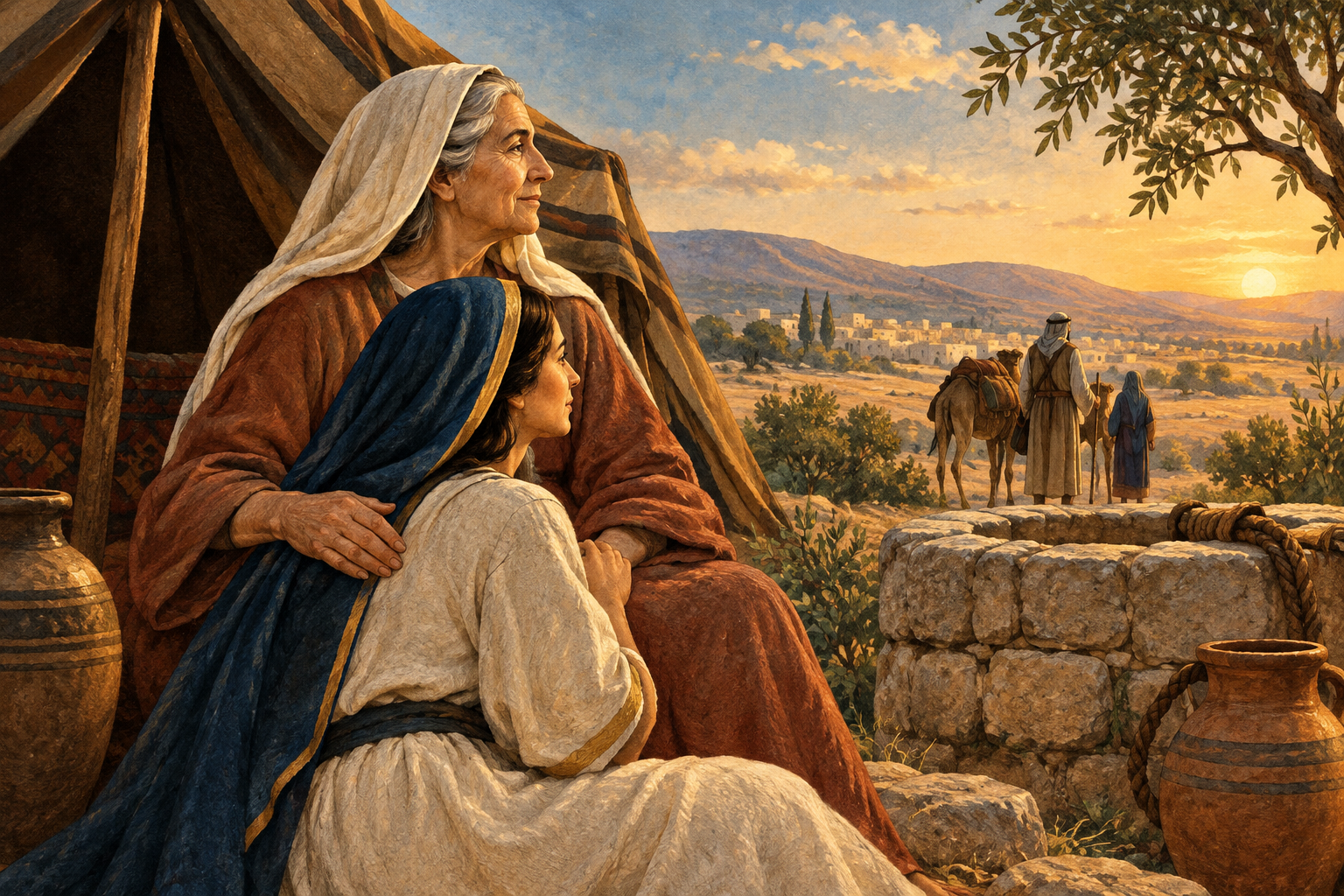
With Sarah gone, Avraham turns his attention to finding a wife for his son Yitzchak. He instructs his trusted servant (traditionally identified as Eliezer) to travel to Avraham’s homeland and not to take a wife for Yitzchak from the Canaanites. The servant swears to fulfill Avraham’s wishes and sets out, praying for a sign to identify the right woman. At the well outside the city of Nahor, Rivka appears and fulfills the sign by offering water to both the servant and his camels. Impressed by her kindness and hospitality, the servant gives her gifts and learns she is the granddaughter of Avraham’s brother Nachor.
The servant is welcomed into Rivka’s family home, where he recounts his mission and the miraculous events at the well. Rivka’s family agrees to the match, and Rivka herself consents to leave immediately. She travels with the servant to Canaan, where Yitzchak meets her in the field. He brings her into his mother Sarah’s tent, and she becomes his wife, bringing him comfort after his mother’s death.
The parasha continues with Avraham marrying Keturah (identified by some as Hagar) and having additional children. However, Avraham gives gifts to these children and sends them eastward, ensuring that Yitzchak remains his sole heir. Avraham dies at the age of 175 and is buried by Yitzchak and Yishmael in the Cave of Machpelah, alongside Sarah. The parasha concludes with a brief genealogy of Yishmael’s descendants and his death at the age of 137.
One of the most striking moments in the parasha is the description of Avraham’s negotiation for the Cave of Machpelah. The Torah emphasizes the public nature of the transaction and the full price paid. The verse states:
Ramban (Nachmanides) explains that the Torah wants to make clear the legitimacy and permanence of Avraham’s acquisition. This is not just a personal act of mourning, but a foundational moment for the Jewish people’s connection to the Land of Israel. By insisting on paying the full price, Avraham ensures that no one can later contest his claim. The cave becomes the first piece of land owned by the Jewish people in Eretz Yisrael, a symbol of our enduring bond with the land.
But there is a deeper lesson here as well. Avraham’s actions teach us about the importance of integrity and transparency. Even in a moment of vulnerability, he insists on doing things properly, in the open, and without shortcuts. This sets a precedent for how we approach both our spiritual and material lives: with honesty, dignity, and a sense of responsibility for the future. The legacy of Avraham and Sarah is not only in their faith, but in the way they lay the groundwork for generations to come, both in family and in the land. May we be inspired to build our own legacies with the same care and integrity.
Created by Rabbi Ari (AI)