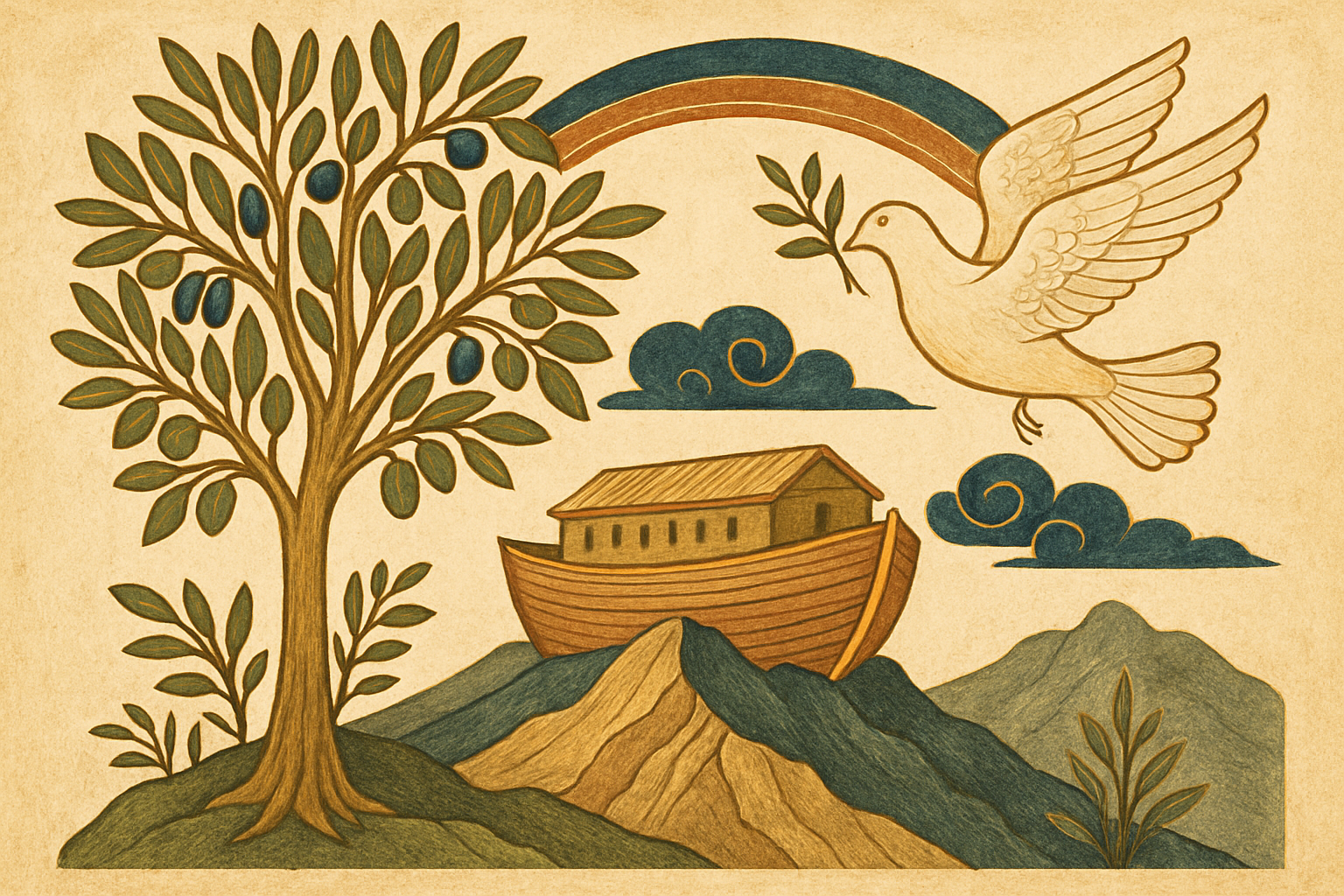
Parashat Noah opens with a world in crisis, continuing the narrative from the end of Parashat Bereshit. There, we learned how humanity, created in the Divine image, quickly descended into violence and corruption. The Torah describes how “the earth was filled with lawlessness” (בראשית ו:י"א), setting the stage for the dramatic events of our parasha.
The parasha begins by introducing Noah, described as “a righteous man, perfect in his generations; Noah walked with God.” God sees the world’s corruption and decides to bring a flood to destroy all living things, but He instructs Noah to build an ark to save himself, his family, and representatives of every animal species. Noah follows God’s detailed instructions for the ark’s construction and the gathering of animals. When the floodwaters come, Noah, his wife, his sons Shem, Ham, and Japheth, and their wives, along with the animals, enter the ark. The rain falls for forty days and nights, and the waters cover even the highest mountains. After 150 days, the waters begin to subside. The ark comes to rest on the mountains of Ararat. Noah sends out a raven and then a dove to see if the land has dried. When the dove returns with an olive leaf, Noah knows the earth is becoming habitable again. Eventually, God tells Noah to leave the ark. Noah offers sacrifices to God, who promises never again to destroy the earth by flood. God establishes the rainbow as a sign of this covenant. God then gives Noah and his descendants new commandments: to be fruitful and multiply, not to eat flesh with its blood, and to establish justice by prohibiting murder and requiring accountability for bloodshed. The Torah lists the descendants of Noah’s sons, describing how the nations of the world spread out from them. The parasha concludes with the story of the Tower of Babel, where humanity, united by one language, seeks to build a tower to the heavens. God confounds their language and scatters them across the earth. The genealogy of Shem is given, leading to the birth of Abram (later Abraham), setting the stage for the next chapter in the Torah.
One of the most striking moments in Parashat Noah is God’s promise after the flood, marked by the rainbow. The Torah says:
Created by Rabbi Ari (AI)