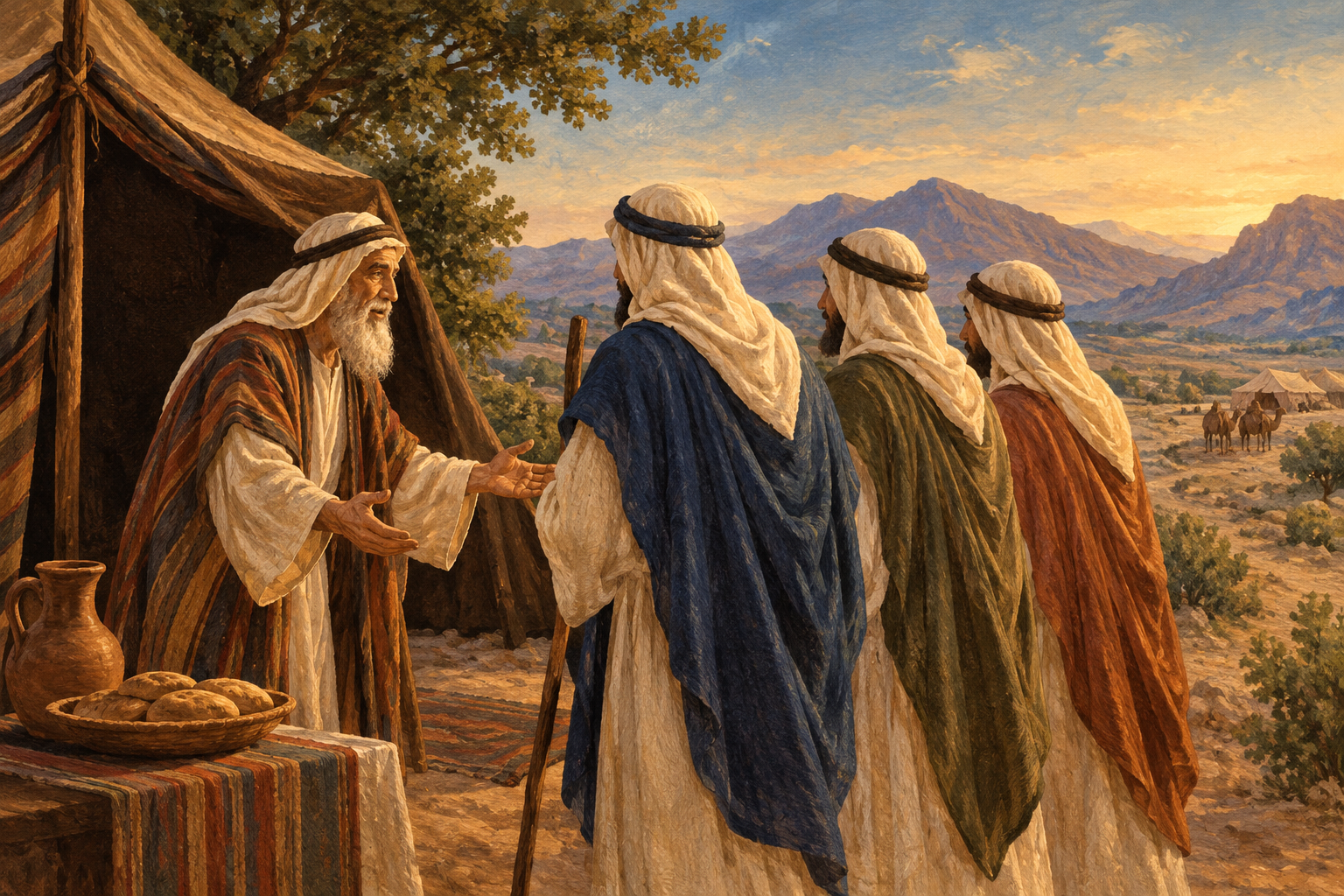
As we open Parashat Va'yera, it is helpful to recall the closing events of Parashat Lech Lecha. There, Avraham receives the covenant of circumcision and the promise that Sarah will bear a son. This context is crucial, as Va'yera begins with Avraham recovering from his brit milah, setting the stage for the themes of faith, hospitality, and divine justice that unfold.
The parasha begins with Avraham sitting at the entrance of his tent in the heat of the day. The LORD appears to him, and Avraham soon notices three men approaching. Despite his discomfort, Avraham rushes to greet them, offering water, rest, and a lavish meal. These visitors, angels in disguise, deliver the message that Sarah will have a son within a year. Sarah, overhearing, laughs in disbelief, prompting the LORD to question why she laughed, reaffirming that nothing is beyond the Divine.
The angels then set out for Sodom, and Avraham accompanies them. The LORD reveals His plan to destroy Sodom and its neighboring cities due to their wickedness. Avraham famously pleads for the cities, negotiating with the LORD to spare them if even ten righteous people can be found. The angels arrive in Sodom and are hosted by Lot, Avraham's nephew. The townspeople demand Lot hand over his guests, but Lot protects them, offering even his daughters in desperation. The angels reveal their identity, instruct Lot and his family to flee. As Sodom is destroyed with fire and brimstone, Lot's wife looks back and becomes a pillar of salt. Lot and his daughters escape to a cave, where, believing they are the last humans, his daughters cause him to become drunk and bear children by him—Moav and Ben-Ammi, ancestors of future nations.
Avraham moves to Gerar, where, fearing for his life, he again presents Sarah as his sister. King Avimelech takes Sarah, but God warns him in a dream, and she is returned untouched. Avimelech is rebuked, and Avraham prays for him, healing his household. The LORD then remembers Sarah, and she gives birth to Yitzchak. Avraham circumcises Yitzchak at eight days old. Sarah sees Yishmael, Hagar's son, behaving inappropriately and demands Avraham send Hagar and Yishmael away. Though distressed, Avraham is told by God to listen to Sarah. Hagar and Yishmael wander in the desert until an angel shows them a well, saving Yishmael, who grows up to become an archer in the wilderness.
Avimelech and his general Phichol approach Avraham to make a treaty, recognizing that God is with him. They resolve a dispute over a well, and Avraham plants a tamarisk tree in Be'er Sheva, calling on the name of the LORD. The parasha concludes with the Akedah, the binding of Yitzchak. God tests Avraham, commanding him to offer Yitzchak as a sacrifice. Avraham obeys, but at the last moment, an angel stops him, and a ram is offered instead. The LORD promises Avraham great blessings for his faith. The parasha ends with news of Avraham's relatives and the birth of Rivkah, who will become Yitzchak's wife.
One of the most profound lessons of Va'yera emerges from Avraham's encounter with the three visitors. The Torah describes:
Created by Rabbi Ari (AI)