As we enter Parashat Va'yetzeh, it is helpful to recall the closing events of Parashat Toldot. There, Jacob, at his mother Rebecca's urging, receives the blessing intended for Esau, leading to Esau's anger and Jacob's flight from Be'er Sheva to Haran. This context is crucial, as Va'yetzeh opens with Jacob on the run, alone and uncertain, beginning a transformative journey that will shape the destiny of the Jewish people.
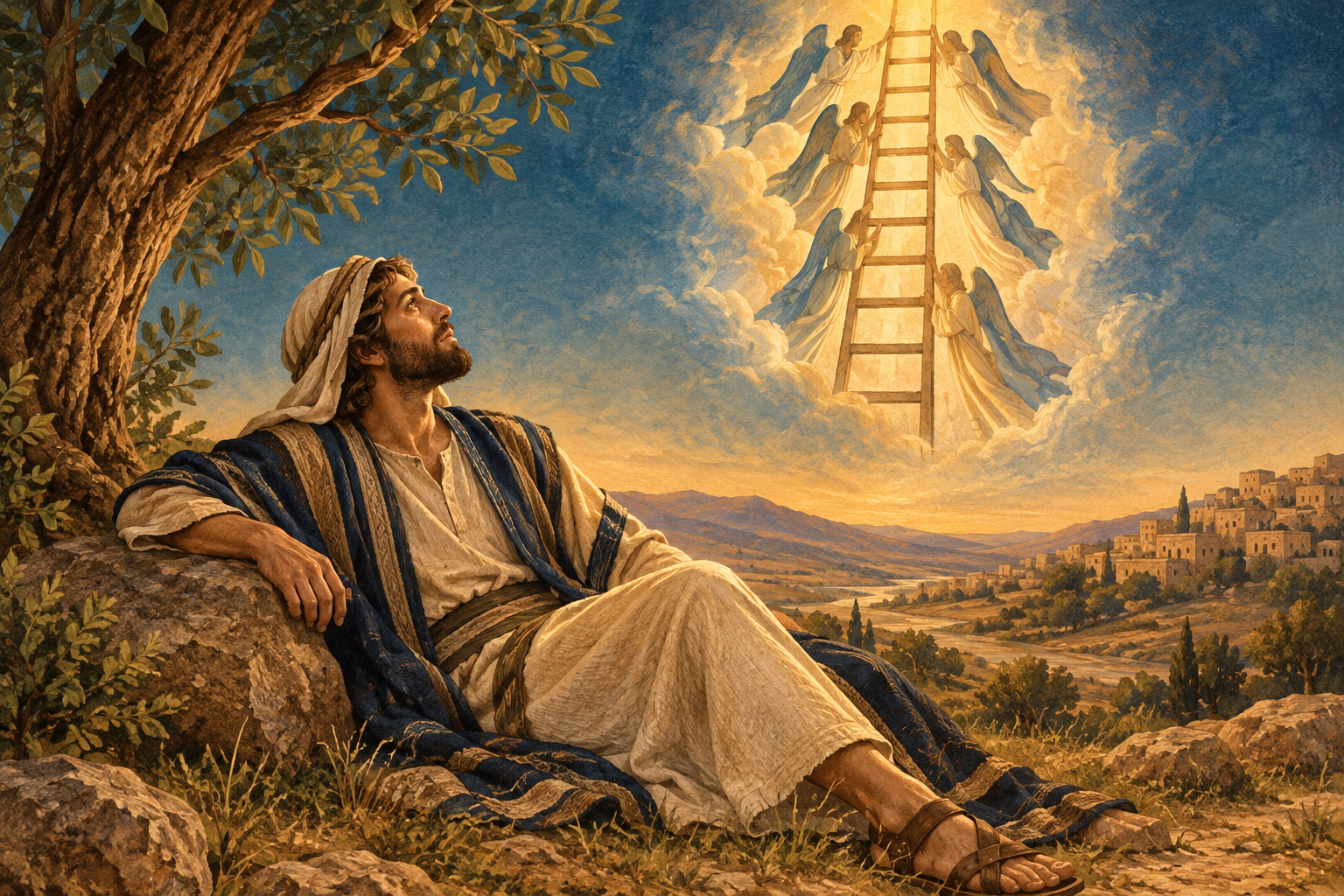
The parasha begins with Jacob leaving Be'er Sheva and heading toward Haran. On his journey, he stops for the night and dreams of a ladder reaching from earth to heaven, with angels ascending and descending. In this dream, the LORD stands above the ladder and promises Jacob the land on which he lies, numerous descendants, and protection wherever he goes. Jacob awakens, awestruck, and sets up the stone he used as a pillow as a monument, naming the place Bethel. He vows that if God protects him and brings him back safely, he will dedicate himself to the LORD and give a tenth of all he receives.
Jacob continues to Haran, where he meets shepherds at a well and encounters Rachel, Laban's daughter. He helps water her flock and is welcomed into Laban's home. Jacob agrees to work seven years for Laban in exchange for marrying Rachel, whom he loves. However, Laban deceives him, giving him Leah, the older daughter, instead. Jacob confronts Laban, who explains that the local custom is to marry off the older daughter first. Laban offers Rachel as well, provided Jacob works another seven years. Jacob agrees, and after a week, he marries Rachel too.
Leah, unloved by Jacob, is blessed by the LORD with children, while Rachel remains barren. Leah gives birth to Reuben, Simeon, Levi, and Judah. Rachel, desperate for children, gives her maidservant Bilhah to Jacob, who bears Dan and Naphtali. Leah, seeing she has stopped bearing, gives her maidservant Zilpah to Jacob, who bears Gad and Asher. Leah later has two more sons, Issachar and Zebulun, and a daughter, Dinah. Finally, the LORD remembers Rachel, and she gives birth to Joseph.
After Joseph's birth, Jacob asks Laban to let him return home. Laban, recognizing that he has prospered because of Jacob, asks him to stay and offers to pay him. Jacob proposes that he will take as his wages all the speckled and spotted sheep and goats. Through a combination of natural means and divine assistance, Jacob's flocks multiply, and he becomes very wealthy.
Laban's sons become jealous, and Laban's attitude toward Jacob changes. The LORD tells Jacob to return to his homeland. Jacob gathers his family and possessions and leaves secretly. Rachel steals her father’s household idols. Laban pursues Jacob and catches up with him in the hills of Gilead. After a tense confrontation, in which Laban searches for his idols but does not find them, Jacob and Laban make a covenant of peace, setting up a stone pillar as a witness. Laban returns home, and Jacob continues on his way, encountering angels of God as he re-enters the land of Canaan.
One of the most striking moments in the parasha is Jacob's dream of the ladder. The Torah describes:
But perhaps the most powerful lesson is found in Jacob's response. Despite his fear and uncertainty, Jacob recognizes the holiness of the moment and the place. He says, "Surely the LORD is in this place, and I did not know it!" (see Genesis 28:16). The Sefat Emet, a Hasidic master, teaches that every place and moment has the potential for holiness, but it is up to us to open our eyes and hearts to perceive it. Jacob's journey, with all its challenges and deceptions, is a model for our own lives: even when we feel alone or lost, the ladder between heaven and earth is present, and the divine promise accompanies us. Our task is to recognize the sacred in our everyday struggles and to transform them into moments of connection with the divine.
Created by Rabbi Ari (AI)