As we approach Parashat Ki Tavo, it is helpful to recall the closing themes of Parashat Ki Teitzei, which focused on a wide array of mitzvot governing interpersonal relationships, justice, and ethical living. These mitzvot set the stage for Ki Tavo, where the Torah shifts from the details of daily life to the broader national destiny of Israel as they prepare to enter the Land.
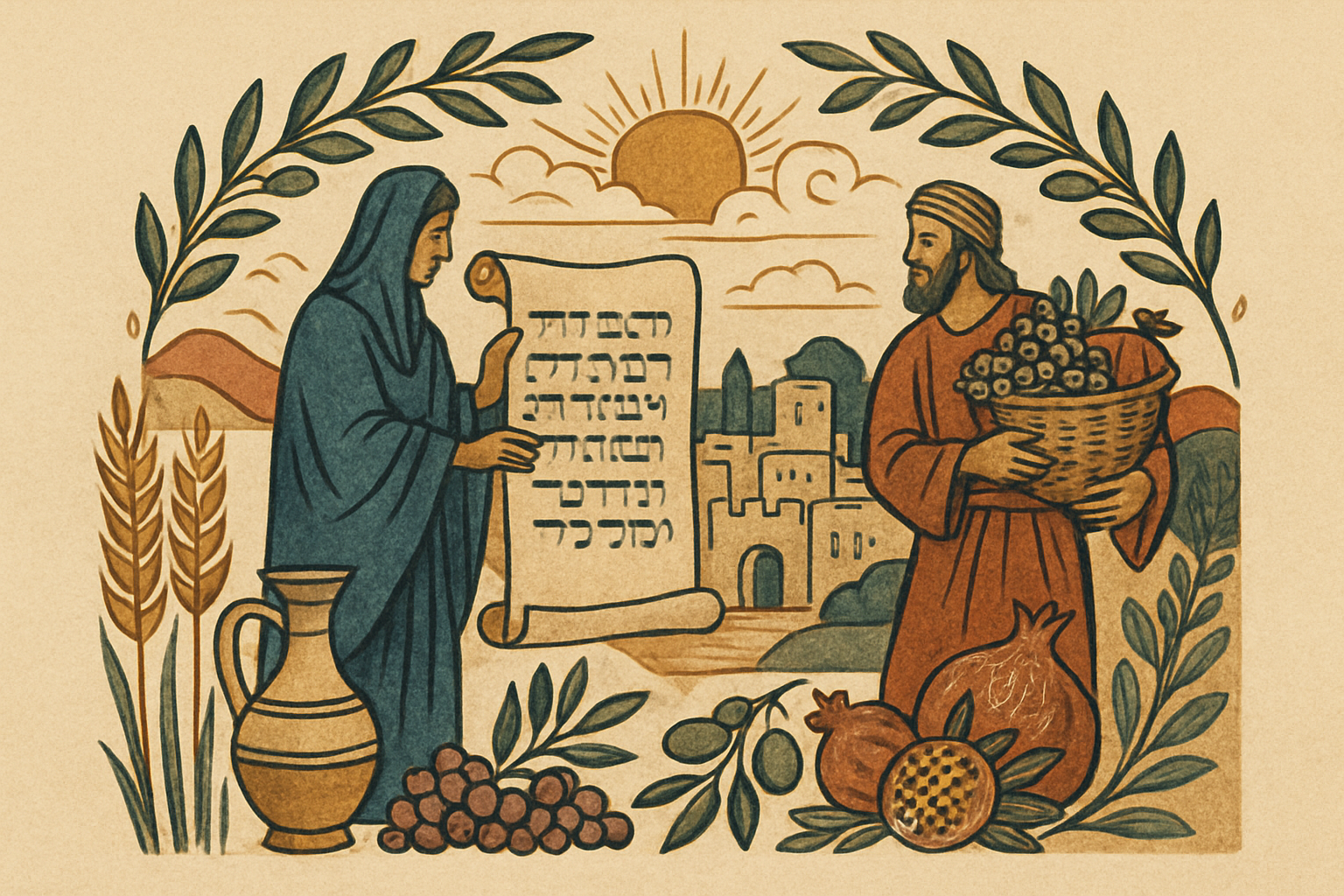
Parashat Ki Tavo opens with the mitzvah of bikkurim—the bringing of the first fruits. When the Israelites settle the Land, they are to bring the first of their produce to the Temple, present it to the Kohen, and recite a declaration recounting the nation’s journey from slavery to freedom. This declaration is a brief retelling of Jewish history, emphasizing gratitude for Hashem’s kindness. The Torah then commands the separation of the ma’aser (tithes) in the third year, ensuring that the Levite, stranger, orphan, and widow are cared for. The person bringing the tithes must also make a declaration affirming that the mitzvot were fulfilled properly.
Moshe then instructs the people: upon crossing the Jordan, they are to set up large stones, coat them with plaster, and inscribe the words of the Torah upon them. An altar is to be built on Mount Ebal, and offerings are to be brought there. The tribes are divided: six stand on Mount Gerizim to bless, and six on Mount Ebal to pronounce curses. The Levites, standing in the valley, recite a series of blessings and curses, to which the people respond "Amen." These include prohibitions against idolatry, disrespecting parents, moving boundary markers, misleading the blind, perverting justice, and other fundamental values.
The parasha then presents a sweeping vision: if Israel obeys Hashem’s commandments, they will be blessed with prosperity, security, and honor among the nations. The blessings are detailed—abundant crops, healthy children, victory over enemies, and more. However, if the people abandon the covenant, a long and harrowing list of curses will befall them: disease, famine, defeat, exile, and suffering. These curses, known as the Tochacha, are among the most sobering passages in the Torah. The parasha concludes with Moshe reminding the people of all that Hashem has done for them since Egypt, urging them to remain faithful and grateful.
One of the most striking features of Ki Tavo is the mitzvah of bikkurim. The Torah commands not only the act of bringing first fruits, but also the recitation of a declaration. The text of this declaration is familiar, as it forms the core of the Passover Haggadah:
Rav Kook teaches that the mitzvah of bikkurim is a model for all spiritual life: to see the fruits of our labor as gifts, to remember our journey, and to express thanks. In a world where it is easy to take success for granted, the Torah insists that we pause, reflect, and give thanks. This practice shapes not only our relationship with Hashem, but also with each other—reminding us to be humble, generous, and ever mindful of the blessings we receive.
Created by Rabbi Ari (AI)