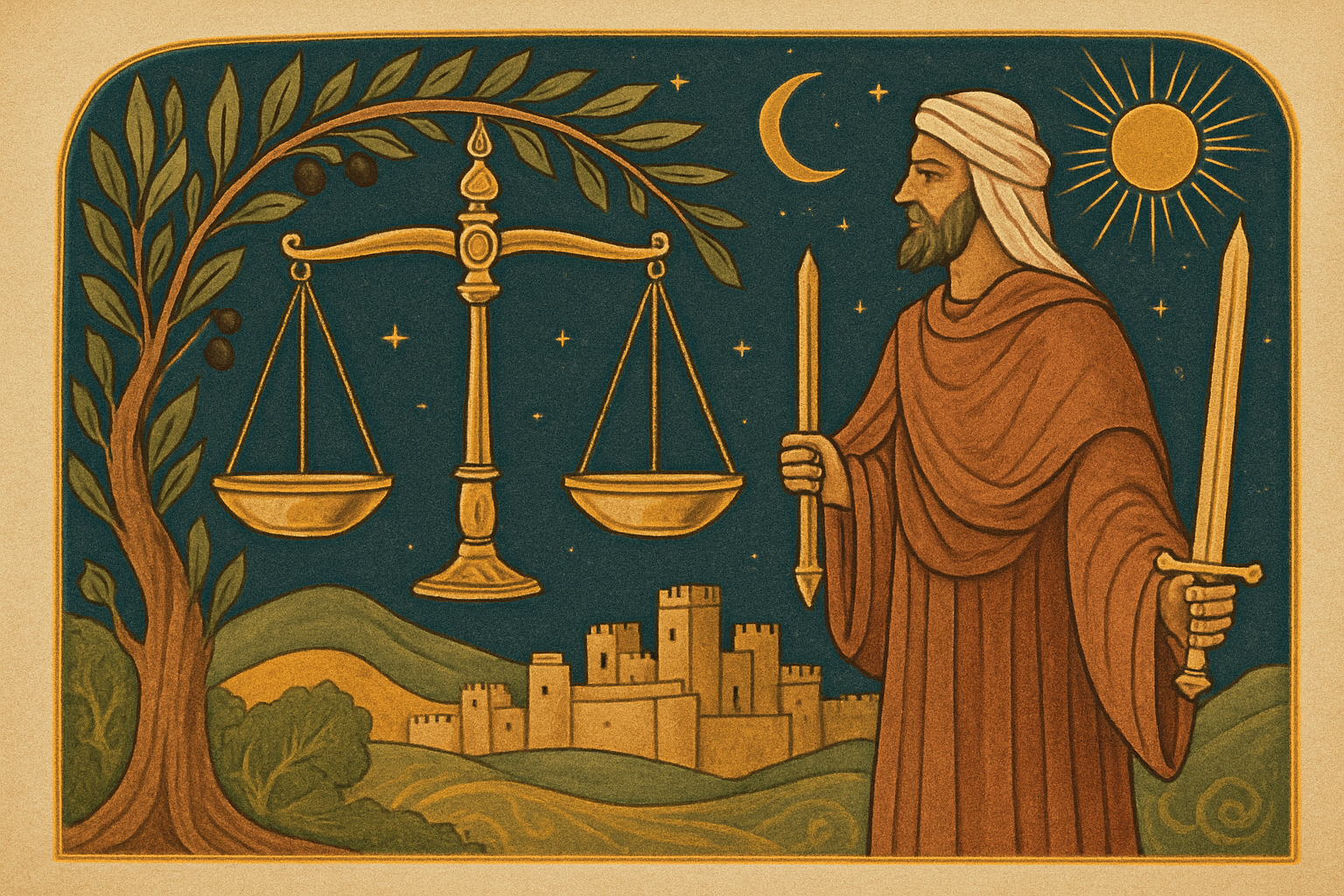
As we transition from Parashat Re'eh to Parashat Shoftim, the Torah shifts its focus from the laws of worship and communal holiness to the structures that will uphold justice and order in the Land of Israel. While Re'eh emphasized the importance of a centralized place of worship and the rejection of idolatry, Shoftim builds on this by establishing the societal frameworks necessary to maintain a just and holy nation.
Parashat Shoftim opens with the command to appoint judges and officers in every city, ensuring that justice is administered fairly and impartially. The Torah warns against perverting justice through favoritism or bribery, famously declaring:
The laws of capital punishment are detailed, including the requirement for at least two witnesses and the process for handling difficult legal cases by bringing them to the central court—the Kohanim and the judge in office at that time. The Torah introduces the concept of a supreme court in Jerusalem, whose rulings are binding on all of Israel.
Shoftim also outlines the laws concerning the appointment of a king. The people may request a king, but he must be chosen by God, be an Israelite, and not accumulate excessive horses, wives, or wealth. The king is commanded to write a personal Torah scroll and study it constantly, to remain humble and faithful to God's law.
The parasha continues with the roles and privileges of the Kohanim and Levi'im, who serve in the Temple and are supported by the community. It warns against adopting the abominable practices of the Canaanite nations, such as sorcery, divination, and child sacrifice. Instead, God promises to raise up prophets from among the people, who will speak His word. The people are cautioned to heed true prophets and to reject false ones, whose words do not come to pass.
Shoftim introduces the laws of the Cities of Refuge, where someone who kills unintentionally can flee for protection until a fair trial is held. The Torah distinguishes between accidental and intentional murder, emphasizing the sanctity of life and the importance of due process.
The parasha addresses the rules of war: before attacking a city, Israel must offer terms of peace. Certain nations are to be treated differently, and the Torah prohibits wanton destruction, even in war—famously commanding not to cut down fruit trees during a siege. The laws of the "eglah arufah"—the ritual performed when a murdered body is found and the killer is unknown—are described, highlighting communal responsibility for justice and the value of every human life.
One of the most striking themes of Parashat Shoftim is the pursuit of justice as the foundation of a holy society. The repetition of the word "justice" in the verse above led many commentators to ask: why the double language? Rashi explains that justice must be pursued both in judgment and in compromise, and always through honest means. The Netziv adds that the pursuit of justice is not only for judges, but for every individual—each person must seek fairness in their own dealings.
The Rambam, in his "Mishneh Torah," sees the command to appoint judges as a communal mitzvah, a collective responsibility. Rav Kook, in his writings, expands this idea: the health of a nation depends not only on its laws, but on the moral character of its leaders and citizens. The Torah's insistence that the king write his own Torah scroll is a profound lesson in humility and accountability. Leadership in Judaism is not about power, but about service and fidelity to higher values.
Perhaps the most powerful message of Shoftim is that justice is not static—it must be actively pursued. The Torah does not simply command us to "do" justice, but to "chase after" it, to make it the driving force of our society. In a world where power can easily corrupt, the Torah reminds us that true greatness lies in humility, integrity, and the relentless pursuit of what is right.
Created by Rabbi Ari (AI)