As we continue our journey through Sefer Devarim, it is worth recalling that last week’s Parashat Shoftim established the foundations of justice and leadership for the Jewish people. There, Moshe instructed the nation about judges, kings, prophets, and the importance of pursuing justice. These themes of justice and ethical conduct flow directly into Parashat Ki Tetzeh, which takes these lofty ideals and grounds them in the everyday realities of communal and personal life.
Parashat Ki Tetzeh is remarkable for its breadth and detail. It contains more mitzvot than any other parasha—over seventy!—covering a wide range of situations. Here is a summary of all the laws and cases found in the parasha:
It begins with the law of the beautiful captive woman: if an Israelite soldier desires a woman captured in war, he must bring her home, allow her to mourn her family, and only then may he marry her. If he later decides not to marry her, he must let her go free. Next, the Torah addresses the rights of the firstborn son, even if he is the child of a less-favored wife; the father must not show favoritism when distributing his inheritance.
The parasha then discusses the case of the rebellious son, whose persistent disobedience and gluttony lead to a severe punishment. The Torah then commands that if a man is executed and hung on a tree, his body must not remain overnight; it must be buried the same day, for leaving it would be a desecration.
We are taught to return lost property to its owner and to help a neighbor whose animal has fallen. Men are forbidden from wearing women’s clothing and vice versa. The mitzvah of sending away the mother bird before taking eggs or chicks is given, promising good and long life for those who fulfill it. The Torah commands us to build a guardrail on a new roof to prevent accidents.
There are prohibitions against mixing species: not planting different seeds together, not plowing with an ox and a donkey together, and not wearing garments of wool and linen mixed together (shatnez). The mitzvah of tzitzit is repeated, instructing us to attach fringes to the corners of our garments.
The parasha details laws of sexual morality: accusations against a bride, punishments for adultery, and prohibitions against certain marriages, including those involving Moabites, Ammonites, Edomites, Egyptians, and others. There are laws about purity in the camp, the prohibition of returning an escaped slave, and the command not to charge interest on loans to fellow Jews.
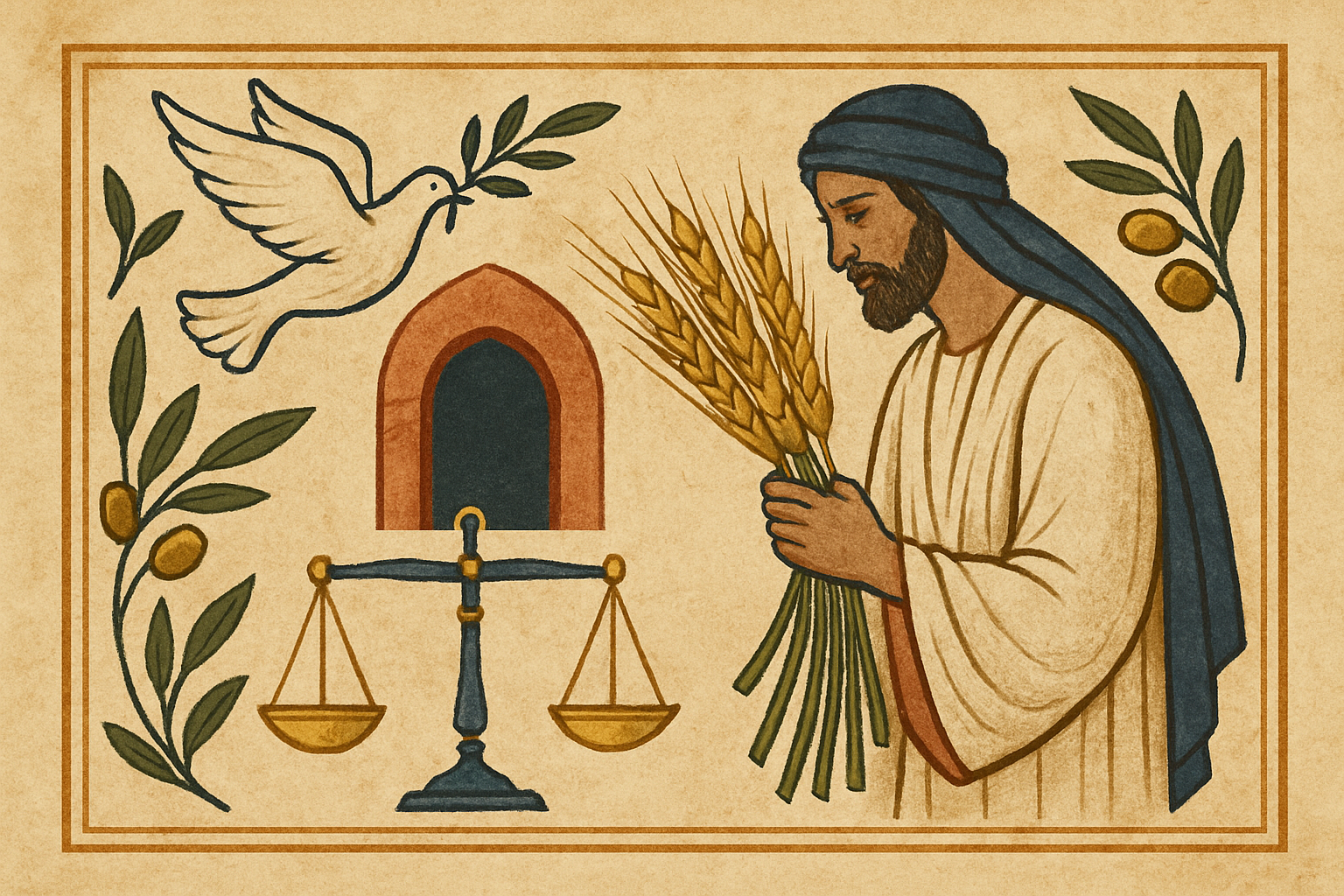
We are told to keep vows made to God, to allow workers to eat from the produce they are harvesting, and not to take excessive collateral from a borrower. The Torah commands us to leave forgotten sheaves, olives, and grapes for the poor, the stranger, the orphan, and the widow.
Further laws include the prohibition of punishing children for their parents’ sins and vice versa, the obligation to pay workers on time, and the prohibition against perverting justice for the vulnerable. The parasha ends with the command to remember what Amalek did to Israel and to blot out their memory.
One of the most striking features of Parashat Ki Tetzeh is how it weaves together laws that protect the dignity and well-being of every member of society, from the most vulnerable to the most powerful. Consider the mitzvah of returning lost property:
Ramban (Nachmanides) notes that many of the mitzvot in this parasha are designed to cultivate sensitivity and compassion. The mitzvah of sending away the mother bird, for example, is not only about kindness to animals but also about training us to be merciful. The Torah’s laws about protecting workers, the poor, and the stranger are all part of a larger vision: to create a community where justice and empathy are the norm, not the exception.
In our own lives, Parashat Ki Tetzeh challenges us to pay attention to the details of how we treat others. Whether it is in business, family, or community, the Torah asks us to act with integrity, fairness, and compassion. By doing so, we help build the kind of society that the Torah envisions—a society where every individual is valued and protected.
Created by Rabbi Ari (AI)